3 Aralık 2018 Pazartesi

Iranian Christian's Koran-Bible Homework Assignment


türkçe links to original Turkish article

(Hürriyet Newspaper, 3 December 2018)

Hâkimden ilginç şart: Kuran’ı-İncil’i oku, özetleyip mahkemeye sun
  Asking for divine guidance after suffering writer's block.

Iranian Ali Karimi (19) converted to Christianity from Islam and
fled to Georgia.  In hopes of reaching his older brother, who had
emigrated to Spain years ago, Karimi entered Turkey with a fake
passport.  He was caught when he tried to board a Madrid-bound
plane at Sabiha Gökçen Airport in Istanbul on 25 November.

In court, Karimi told the judge he was afraid to return to Iran
because he is a Christian convert and is considered a 'mürted'
(apostate) in Iran.  In response, the court ordered his release
with the following conditions:

          -- sign in at the police station each Sunday;

          -- read the Koran and the Bible, summarizing the similarities
              and differences between them and submit a one-page essay
              each Friday to the court. (!)

Karimi accepted the conditions and was released. However, he
failed to submit his first essay last Friday. (!)

quran bible ile ilgili görsel sonucu

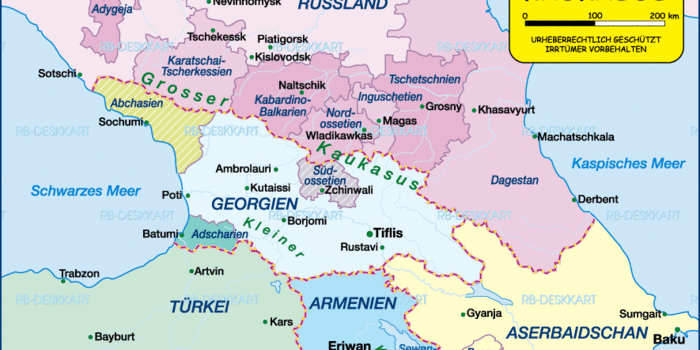
TNT History Mini-Series: Islamic Army of the Caucasus in Dagestan (1918)/Part XI/FINAL

//Ed. Note: The IAC/NCC's seizure of Petrovsk on 7 
November 1918, came a week after, first, the Mondros 
Armistice was signed on 30 October and, second, after
Turkish leaders Enver, Talat and Cemal fled Istanbul
on 1 November to Sevastopol aboard a German warship. 

The bloody battles of Dagestan, written about in detail
by Colonel Mehmed Tevfik a year after the battles in 
1919 (and published in 1927), and presented here in 11
parts by TNT, reflect the horrors of war, the courage of
warriors and, in this case, the futility of the efforts of 
the Islamic Army of the Caucasus. Nevertheless, the
IAC's success in the Caucasus was one of the few 
military bright spots for the Ottomans in WWI, but,
alas, a forgotten one.

Because with the end of the War, the Turks withdrew
from this remote corner of the Great War's stage
and the Bolsheviks/Soviets eventually claimed control 
over all of the Caucasus, snuffing out the fledgling 
Moslem republics there and Enver's dream of  a Pan
-Turkic empire stretching to back to Turkish origins
in Mongolia.//

Treaty of Mondros click here for more information.

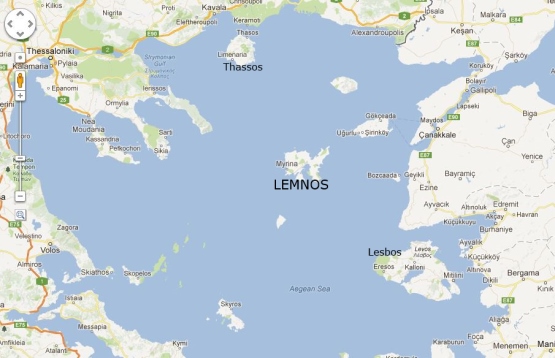
limnos island map ile ilgili görsel sonucu
Far away from Dagestan, the Mondros Armistice was signed
on 30 October 1918 on the British warship Agamemnon in 
the harbor of Mondros (also 'Moudros') on Lemnos Island.

At 2 o’clock on 8 November, a delegation of leaders came from the city
to the Division HQS, saying that Bicherekhov had left the city and that 
the populace had begun to loot.  They requested that the Turkish Army
occupy the city.  Based on an order from the Army, at 4:30 o’clock in 
the afternoon the triumphant  15th Division formally entered the city 
in parade formation and settled into the barracks in the south of the city.

In the course of the 2-day Tarki battle, 10 officers were wounded, 
including the Division Commander, two regimental commanders, a  
battalion commander and 6 company commanders.  Five officers 
were martyred, including 3 company commanders.  As for the soldiers,
318 were wounded, 113 were martyred and 10 are missing.

It is thought that more then 200 of the enemy were killed during the 
pitched battle.The 15th Division brought great honor upon itself by 
cleansing the land of Azerbaijan and the Northern Caucasus of the 
enemy, ensuring security and order, and thereby allowing the 
governments to establish themselves.  This Division, after coming to
Baku from Gemri, had combined with the 5th Division to successfully
attack Baku.  It is certain that without the 15th Division, Baku would
not have been taken.


Battle of Baku: Turkish forces represented by the
arrows heading toward Baku from the north and 
west on 14 September 1918.

Following this success, the 15th Division cleansed the land from Baku
to Petrovsk of the enemy in one short month and thereby provided 
enormous support to the brotherly peoples of Azerbaijan and the North
Caucasus, in the name of the Turkish nation.

In addition, the self-sacrifice and courage the Division displayed in the 
Baku, Derbent and Petrovsk attacks deserve to be written in gold letters
in our military history.  Even after  four years of war and great 
deprivation, the Turkish Army proved by the good order and bravery
shown during these battles that it is the finest attacking army in the
world.

All the troops of the Division performed their duties properly and, in 
particular, the heroic 56th Regiment is deserving of the title of Liberator
of Baku, Derbent and Petrovsk.

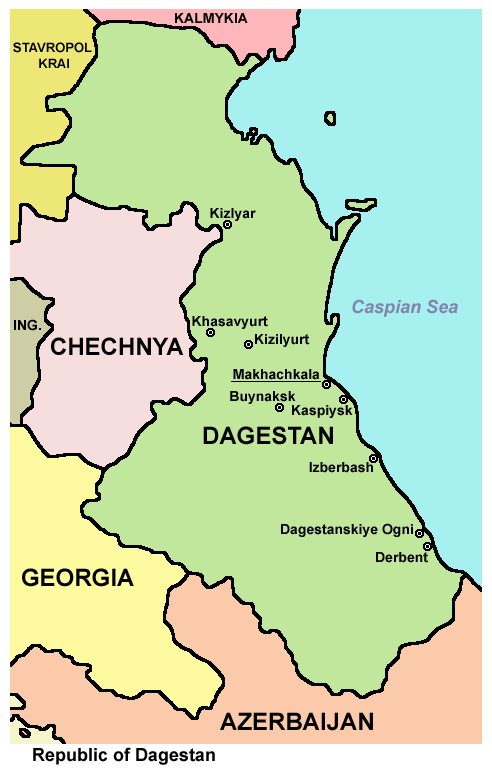
baku derbent makhachkala haritası ile ilgili görsel sonucu
    On the right: Baku, Derbent, Makhachkala (Petrovsk).

The officers and commanders, together with the senior commanders, 
performed their duties well.  The Division’s general staff worked 
continually with organization, effort and self-sacrifice to ensure transport,
food, provisions and all other services and is deserving of the gratitude 
of the entire Division. 

The post-Derbent operation was administered with great shrewdness and
courage by Yufuf İzzet Paşa.  The speed and bravery exhibited by the 
15th Division after Derbent and during the assault on Petrovsk would not
have been possible with Yusuf İzzet Paşa’s impact and influence.

The extension of the operation to Petrovsk, after Derbent, and the
seizure of Baku were appropriate with regard to completing the
mission. With the armistice (Mondros, 30 October 1918), the Turkish
nation plunged into an especially painful situation.  Nevertheless, would
it have  been possible to abandon the mission of liberating our
brotherly nations while there still were the means to press on?  

Although the operations in Azerbaijan and, in particular, in the North 
Caucasus, proceeded quickly, this coincided with the mother country’s 
dangerous situation.  And since the Caucasus had to be immediately 
evacuated because of the armistice, the Turkish Army’s support for the
Caucasus Turks and Moslems and the extraordinary self-sacrifice it 
exhibited in the face of enormous challenges has all but been forgotten.

north caucasus republic 1918 ile ilgili görsel sonucu
The leaders of the short-lived Northern Caucasus Republic


                                Evacuation of the Northern Caucasus

Bicherekhov had not accepted the demand that he evacuate the land of
the North Caucasus and so, as has been described above, he was
attacked on 4/5 November 1918 and fierce fighting continued on 5/6
November. 

Following the seizure of Tarki Mountain,  a delegation from
Bicherekhov requested a break in hostilities, in accordance with the
armistice (Mondros).  Because of this preference for a political solution,
the fighting ended.  The Prime Minister and Minister of War İzzet Paşa
ordered that all materiel in the Caucasus, other than that which had
been authorized by the Brest-Litovsk Treaty, be removed within 6
weeks, beginning on 24 October.  This telegram-order was written in
Istanbul on 26 October, received in Baku on 5 November and delivered
to Yusuf İzzet Paşa in the vicinity of Petrovsk a few days later. 

Relative to the number of troops to be transported, the railway capacity
was insufficient and because of the long distances involved, evacuation
within the allotted time frame was impossible.  There were not enough
means available to transport all the troops right away.  It would require
three trips to transport the materiel involved to Batumi.  Since it was
necessary to begin the evacuation with the troops farthest away,  a
sufficient number of emptry trains were sent north from Baku on 9
November to transport the materiel and troops at Petrovsk. 

On 12 November, the mountain ‘obüs’ battery was transported and on
17 November the 46th Battalion of the 13th Regiment and the 5th
Division’s health company were sent.  The transport of the 15th Division
from Petrovsk did not begin until 22 November.  With the last remnants
of the 15th Division passing through Bilecari station, north of Baku, on
29 November, the North Caucasus had been completely evacuated by
Turkish troops at the end of November 1918.


kafkas islam ordusu ile ilgili görsel sonucu

//End of Part XI/FINAL//

TNT History Mini-Series: Islamic Army of the Caucasus in Dagestan (1918)/Part X

//Ed. Note: The battle for Tarki Mountain, as the last
impediment to the IAC/NCC in its quest to take Petrovsk,
(today's Makhachkala) went back and forth in the first 
week of November 1918.  The battle was fought in 
terrible conditions and losses on both sides were heavy. 

And all this came a week after the Great War had ended 
for the Ottoman Empire, with the punitive Mondros 
Armistice, signed with the Allies on 30 October.//

Athough initially the Dagestan Detachment, under the command of 
Kemal Bey who was a member of Akif Bey’s group, which joined the
attack on the left flank of the Division, was successful, the strong 
enemy counterattack forced them to retreat.  At 1 o’clock, the enemy
launched a counterattack on hill 1579, which Nuri Bey’s regiment had
taken, prompting a fierce battle all along the front.  The big guns of 
the two warships and the long-range battery south of the Petrovsk 
electric company continually pounded the Ağaç Ağil valley and the 
center of the front.


Tarki Mountain was the site of the IAC/NCC's
final battle in its Dagestan expedition.

At 1330 hours, Nuri Bey’s regiment began to retreat under the effect
of the enemy counterattacks with additional forces and scattered into
the valley.  Four officers from Ye107 T1 were wounded and just 40
soldiers remained healthy.  Subsequently, the enemy counterattack 
was turned toward Ye56, which had seized  the Tarki Mountain pass.

The heroic battalion, after spending its last bullets and bombs and 
after the deaths of two company commanders and valued soldiers, 
retreated in an anxious mood toward Ağaç Ağil.  This retreat allowed
the enemy to occupy the pass location and the line between there and 
hill 1579.  The enemy then rained fire down on our retreating troops, 
resulting is severe losses.  With the retreat of Nuri Bey’s regiment on the
right and 56 T2 on the left, Ye56 T1 was left surrounded by the enemy 
but despite this horrible situation, did not abandon its position.

We mounted a counterattack to rescue Ye56 T2 and take back the crest 
line.  At a quarter past 2, Ye38 T2’s machine gun company attacked 
toward the pass.  Ye38 T3 had already been sent toward Tarki so the 
Division was left with only Ye38 T1 in reserve.

With a counterattack by the 38th Regiment toward sunset the pass was 
retaken.   Ye38, on the right, and Ye56 on the left,  spent the night of 5/6 
November at the crest line.  Hill 1579, on Ye38’s right flank, was 
occupied by the enemy.  By working the entire night, the regiment was
assembled and sent for an counterattack on 1579.  Prior to dawn, this 
too was retaken and the situation rectified.

The terrain on which this fighting took place had no roads for vehicles 
or even animals, for that matter.  So food and ammunition resupply and 
removal of the wounded could only be accomplished under the harshest 
conditions that defy description.  The ammunition boxes, the wounded 
and food were all carried on the backs of soldiers.  On this night, like 
last night, there was no sleep.  The troops had climbed, attacked, 
scattered and counterattacked continually for 36 hours.  In short, they 
were exhausted by the tides of battle. 

makhachkala dagestan 1918 ile ilgili görsel sonucu
                       Railway Station Square, Petrovsk

The Battle of Petrovsk on 5 November 1918 was the last battle in
Dagestan and the bloodiest.  The troops and commanders fought with
superhuman sacrifice and competed with each other in heroic acts. 
Everyone was thrown forward. The zealous Division General Staff
attacked on Tarki Mountain with hunters.

Akif Bey’s group retreated before sunset and did not return to its old 
position, nor was it able to launch another attack.  In fact, unfortunately,
the bulk of the assisting local forces were scattered as a result of their 
lack of success.

The mountain ‘obüs’ battery that the Islam Army sent from Baku 
arrived  on 6 November and was installed in the vicinity of the ‘kudretli’
battery’s position.   At 9 o’clock Ye38 T1, which was the Division’s 
reserve, came to the area of the pass and with great self-sacrifice move 
all of the Division’s ammunition 1 kilometer forward, securing Tarki 
Mountain more effectively. Ye107 T1, with only two healthy officers 
remaining, was made a Division reserve and organized into two 
companies.

The enemy, with many reinforcements, fiercely and desperately 
counterattacked against Ye38 at half past one and against Ye107 T2 at 
a quarter past three.  The attack on Y38 resulted in bloody losses and 
scattering.  Although at first Ye107 T3 pulled back 600 meters, it was 
able to retake its former position with the help of reserve forces that 
were sent  forward.  The enemy retreated toward Tarki village.

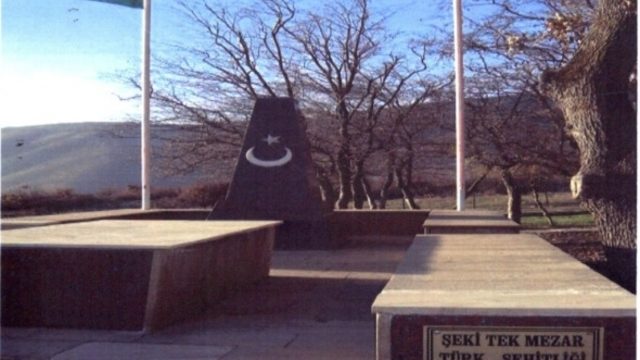
türk mezarlığı dağistan ile ilgili görsel sonucu
          Monument to Turkish war dead in the Caucasus. 

The enemy’s hopes were completely dashed, its lines in disorder and the
signs of fear began to show themself.  Toward sunset, a group of enemy 
soldiers could be seen fleeing in the direction of Petrovsk.

There was a cease-fire at sunset and the Division was able to sleep the 
night on Tarki Mountain in safety.  We were now masters of Petrovsk city
and its plain.  The enemy was 200-400 meters across from our Division’s
front.  Akif Bey’s group was not able to advance today. 

At 9 o’clock Yusuf İzzet Paşa issued the following order:

“The proposal from the leaders of the opposition that came from Petrovsk
has been deemed to be in conformity with the political situation of the 
North Caucasus government.  In accordance with a decision of the 
Republic’s government,  until further notice the attack is in abeyance.  
The positions are to be fortified and defended.  In the event that the 
enemy attacks, there will be a counterattack.”

On the morning of 7 November, the enemy completely vacated Tarki 
Mountain.  Nevertheless, in accordance with the Army’s order, the 
Division did not pursue the enemy.

petrovsk dagestan 1918 ile ilgili görsel sonucu
       Memorial to the British soldiers who died at Baku.

//End of Part X//


2 Aralık 2018 Pazar

TNT History Mini-Series: Islamic Army of the Caucasus in Dagestan (1918)/Part IX

//Ed. Note: The Battle for Petrovsk erupts, ironically just
as the Mondros Armistice is signed on 30 October 1918, 
subjecting the Ottoman Empire to dismemberment. The 
gains made in Azerbaijan and Dagestan by the IAC are
essentially voided by the armistice.//


Battle map of the Petrovsk assault. Caspian Sea is
at right, dotted line along the coast in the railway.


                       The Attack and Seizure of Petrovsk

The 15th Division, which reached a point opposite Petrovsk, occupied
 the lines below on 28 October in order to attack the city.

Cavalry company: assigned to surveil the flat land between the coast
and the railway.

Ye107: positioned at Şamahal Hill and east of it.  As the regiment 
advanced, there was an artillerby dual that continued in various stages
until noon.

Ye38: one battalion and three teams occupied a position overlooking 
Çerkes Valley in the north and, along with other elements, remained in
reserve west of this position.

Ye56: moved to the south of Tehyik Solgan Hill in order to be a 
reserve for the Division. The cavalry regiment , together with the left 
column, advanced to 3 kilometers east of Atlı Boyun.

A local detachment of 600 infantrymen and 300 cavalry commanded 
by Colonel Kemal Bey of the North Caucasus Army:

Occupied a line as far as Ostriya Hill (altitude 2241), north of the 
Petrovsk-Demirhan Şura road and on the left flank of the cavalry 
regiment. The Division fortified the line described above and made 
the requisite reconnaissance of the front from where the attack was to
 be conducted.

These preparations began on 28 October and were finished on the 
evening of 4 November.  During this period the Tarki and Şamahal 
stations were occupied by our forces and a number of minor raid and
attacks by the enemy were rebuffed.

As the result of reconnaissance efforts, it was decided to change the 
main line of attack from Ağaç Agil to the enemy’s hills  1579-2564 
in the direction of Tarki Mountain.

The plain from 1579 hill to the sea had been reinforced with barbed wire
and otherwise fortified with 15 cannons so an attack here was quite 
difficult. The enemy’s armored trains and 2 warships provided stiff 
resistance to our attack.

petrovsk dagestan 1918 ile ilgili görsel sonucu
                                    The Petrovsk bazar.

Based on this situation, the existing forces were deployed as follows:

The 15th Division was assigned to the area two kilometers south of the
 Petrovsk-Demirhan Şura road from the Caspian Sea, which runs south 
of Petrovsk, and a group under the command of Colonel Akif Bey was 
positioned up from the left flank.

Akif Bey’s group was comprised of the 15th Division’s cavalry regiment,
and Kemal Bey’s  detachment  consisted of local forces made up of 1,000
infantrymen, 300 cavalry, together with Colonel Şükrü Bey’s detachment.
Both groups were under Army command and were to attack after 
midnight on 4/5 November in the manner outlined below:

The 15th Division was to occupy the enemy position on the Çerkes Ozen
 front with a small force and support the right flank of the main attack.  
The bulk of forces  were to attack Tarki Mountain, while the majority of
 Akif Bey’s infantry were to attack the north slope of Tarki Mountain 
from south of the Demirhan Şura road, with a battery company and a
 machine gun company.  The left flank column, made up of the 
remaining  forces was to attack the Kafkasda station - ?Terenakutan? 
line.

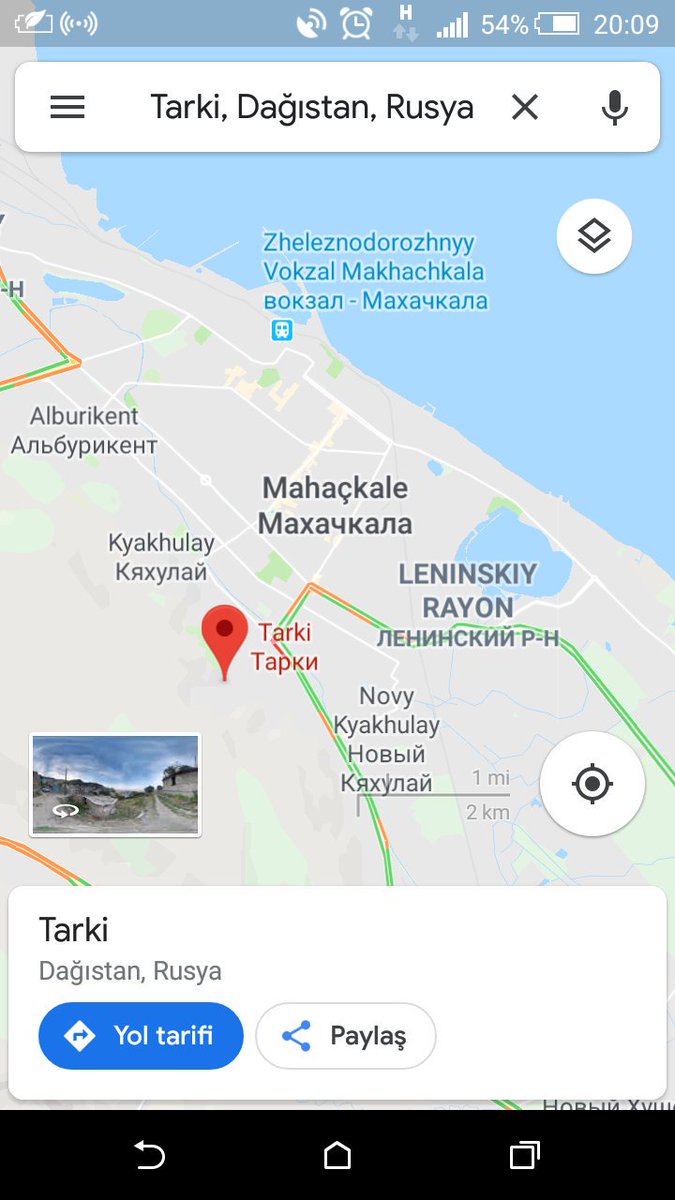
petrovsk dagestan 1918 ile ilgili görsel sonucu

Tarki Mountain, relative to Makhachkale (Petrovsk).


Both groups were to seize the aformentioned lines before 5 o’clock on 5
November and in accordance with this order, the 15th Division made the
following dispositions:

Nuri Bey’s detachment made up of Ye107 T2, T46, K107 machine gun
company  and the rapid-fire Krupp mountain team would go to the west 
of 1579 hill;

56th Regiment, comprised of T1, T2, K56 machine gun company, Ye107
T1 and a rapid-fire Krupp mountain team, would attack the east side of 
2564 hill and the Çerkes Ozen detachment consisting of two companies 
from Ye107 T3, 250 militia infantry, 50 horseriders, one field gun and two
mountain cannnon, would occupy the enemy facing them and then 
support the attack of the Division’s main force.

38th Regiment would remain at 2006 Tehyik Solgan, in the vicinity of the
Division’s observation locale at midnight on 4/5 November, in order to 
be in reserve for the Division.

petrovsk dagestan 1918 ile ilgili görsel sonucu
                                                Petrovsk


The Pitched Battle for Petrovsk

4 November 1918 was a very rainy day.  In particular, the newly opened
roads were almost impossible to walk on.  The fierce, cold wind that 
began in the evening froze the bodies that were wet from the all-day rain.

Eight hours later, it took four hours of forced marching to traverse the 
3-4 kilometers from Kaytar Kotan, where the Division HQS was, to the 
observation location.  Because of fog and darkness, the required 
reconnaissance saw nothing until dawn and no news came about the 
troops’ operation.  Ye38, the ‘kudretli’ battery and the Krupp mountain 
team, which the Division needed, were only able to reach the observation
 location a bit before dawn on 5 November and they were sent to a spot 
in the vicinity of the artillery observation position.   Because of the same
difficult marching conditions, the raid that was supposed to occur before
5 o’clock was not made on time.  By  6 o’clock the 56th Regiment had
only been able to reach a point 400 meters south of the ordered line.  
The 56th Regiment drew closer and at 0620 hours a fierce infantry battle
began.  After that both sides began firing their heavy guns and the air 
turned gray.

The southern slopes of Tarki Mountain, which was attacked, were
incredibly steep and rocky.  Passing through this smokey air, the
infantrymen came to a pass that was suitable for transit.  Under the
 enemy fire being rained down upon them, our infantrymen climbed
the mountain as if racing against one another, with almost superhuman
 strength.  The enemy defending this pass fired  their machine guns and
 threw bombs as if they had gone mad.  The battle around the pass was
 quite violent and the attacking Ye56 T2 had to stop at the closest point
 for a period.  The 1st Battalion, advancing on the left of tht 56th
Regiment,  seized the summit of Tarki Mountain, altitude 2562, at 0730
 hours by means of great self-sacrifice.  The 1st Battalion then turned
its machine guns on the pass, which had not yet been taken, from the
side and rained fire on it effectively.  Out artillery fire was concentrated
on the pass, as well.  Ye56, which was reinforced by Ye38 T3, finally
seized the pass by means of selective attacks at 11 o’clock and scattered
the bewildered enemy.  The seizure of the pass yielded booty in the form
 of three enemy machine guns, a cannonball and abundant ammunition.
A Russian officer was taken prisoner and said that there had been
1,500 enemy infantrymen defending Tarki Mountain.

Thanks to the 56th Regiment’s flank support and our artillery’s
destructive fire, Nuri Bey’s regiment  seized the 1579 altitude hill and
 its eastern side with an attack at 1230 hours and subsequently occupied
 the entire line.  The Division had performed its duty completely.

                At noon the Çerkes Ozen detachment attacked but was
unable to advance because of the enemy’s superiority. 

//End Part IX//

TNT History Mini-Series: Islamic Army of the Caucasus in Dagestan (1918)/Part VIII

//Ed. Note: During the last 10 days of October 1918, the
IAC/NCC inched northward from Derbent toward Petrovsk,
against the determined resistance shown by Bicherekhov's 
forces.//  


petrovsk dagestan 1918 ile ilgili görsel sonucu
                         Baryatinski Street, Petrovsk

From 20 October until the siege of Petrovsk, these operations were 
conducted:

The 15th Division’s command was as follows on 19 October:

                Division Commander: Colonel Süleyman İzzet Bey

                Chief of Staff: Captain İhsan Efendi

In accordance with the orders given above, the Division assembled in 
two groups as related below on the morning of 20 October, at the 
position north of Derbent under the command of Ye107: Ye107 T2, T3
and T46/3, together with a field team and a Krupp rapid-fire mountain
battery.

At Kemakh, under the order of the Division Commander: Ye38, Ye56 
T1, 2, Ye107 and a ‘kudretli’ (capable?) gun battary and a Krupp 
mountain battery and a health company at Kemakh.

TheArmy Commander wanted the enemy, with the bulk of its force 
at Han Mamudkala, put in retreat and prisoners taken.  To accomplish 
this, forces under the command of the Ye107 Commander were to 
occupy the enemy front and troops under the Division Commander were
 to march from Kemakh via the Zaryan-Bilhadi-Kavur Tepe-east Samanlı
Tepe route to Hacıkent.

The troops were prepared on time and the surrounding arm moved before
7 o’clock and along with Ye38, occupied Hacıkent that evening.  The 
enemy got word of the surrounding arm’s movement and, partially on 
foot, partially by train, retreated.

petrovsk dagestan 1918 ile ilgili görsel sonucu
                                 Petrovsk Train Station

The detachment that advanced from the front remained at Han 
Mamudkala.  The surrounding arm traversed three streams without 
bridges and its men were worn out from a march of more than 50 
kilometers.  Word was received that the enemy had stopped its retreat
at Kayakent and was preparing to make a  defensive stand there.  In
order to launch an attack on 22 October, the troops marched a short 
way on 21 October and reached Acıkol and an area northwest of 
Hacıkent, where they rested.

In order to occupy the enemy position, the Division, together with 
a detachment under the command of the Ye107 Commander,  
attacked the enemy in the vicinity of Kayakent on the morning of 
22 October, by passing through Aleksanderkent Başköy to surround 
the enemy.  Following a fierce 1-hour battle, Yangı Bunyağı was 
occupied.  Immediately after, moving with difficulty through thick 
brush, the troops attacked the enemy at Şahra Dağ.  After 4 o’clock,
the ridges south of Bunyak station and the north slopes of Şahra Dağ
were occupled.

petrovsk dagestan 1918 ile ilgili görsel sonucu
Makhachkala/Petrovsk; Buynaksk/Demirhan Şura

After a the cavalry company attacked and seized Bunyağı, they 
encountered an enemy company that had taken the wrong road and 
dispersed them with an attack on horseback.  Two guns on oxcarts 
and an ammunition wagon belonging to the enemy were seized.

After resting until noon on 24 October, the troops moved from Bunyağı
station to the north.  After the defeats at Şahra Dağı and Bunyağı, the 
enemy was forced to retreat to Petrovsk.

On 25 October, food provisions were obtained, ammunition was readied
and the soldiers rested so there was no attack made.  Taking advantage 
of the militia cavalry who arrived, a 3-company cavalry regiment was 
formed, in the care of K42.

Without resistance, the Division reached the Minas Suyu line on 26 
October and before 6 o’clock on 27 October moved in three columns 
from Minas toward Petrovsk.  The right column consisted of the 
detachment under the command of the 107th Regiment, the middle 
column was made up of Ye38 and the left column was comprised of 
Ye56 and some other divisional troops.

The right column, which advanced across the plain from the west  to a 
point 3 kilometers from the rail line, was subjected to fierce artillery fire
from an armored train and so made only slow progress.  The artillery of
the middle column took a position twice and forced the armored train 
away, allowing Ye107 to advance.  As the result of enemy resistance at 
the Tarki station, where there were two armored trains, a field gun team,
two machine guns and 150 foot soldiers, the right column was forced to
stop 3 kilometer south of the Tarki station-Şamahal Hill line.

petrovsk dagestan 1918 ile ilgili görsel sonucu

                Tarki Mountain

The central column met no enemy resistance and advanced through very 
steep terrain1667 (altitude?)  along three routes and reached the east side
of the hill.

After the right column scattered a Cossack cavalry company at Kaytar 
Kotan, it moved to Tehyik Solgan’s eastern ridge 2006 (altitude?), south
of Kaytar Koban, the cavalry regiments reached the Saldan Hill – 2450 
(altitude?) – Atlı Boyun line and then the Division HQS Kaytar Koban, 
where they stayed the night.

In my humble opinion, in order to seize Derbent, which was occupied by
a powerful enemy, the 15th Division was transported by rail from Baku 
to Derbent and it then assembled in an easily-defended rear position for 
the Derbent raid and, in particular, for the subsequent attacks after Derbent.
This should serve as a forceful example of organizing a pursuit.  But had 
the enemy been pursued with by all elements and without rest, there would
 have been no chance for the enemy to regroup and mount a serious defense.

During the pursuit, it would have been more effective if the enemy had been 
surrounded, rather than attacked only from the front line.  Without the 
surrounding movement, the enemy was  able to escape destruction and 
captivity thanks to the railway. 

petrovsk dagestan 1918 ile ilgili görsel sonucu

//End Part VIII//

1 Aralık 2018 Cumartesi

TNT History Mini-Series: Islamic Army of the Caucasus in Dagestan (1918)/Part VII

//Ed. Note: Prior to taking Petrovsk on 6 November 1918, 
the IAC/NCC had to fight north from Derbent during the
month of October, in the face of stiff resistance from 
Bicherekhov's forces, complemented by armored trains
and Russian ships in the Caspian Sea.

The details of the battles reveal precise military moves
and, unfortunately, high casualties.//


dagestan muharebeleri 1918 ile ilgili görsel sonucu

Battles Conducted North of Derbent

After the seizure of Derbent, the 15th Division was forced to halt 4
kilometers north of Derbent and remained at this location for 10 days
(sic), from 6 to 20 October.  During this period the enemy attacked a
number of times in an effort to retake Derbent, but was repulsed each
time.  The battles that occurred during this 10-day period are detailed
below.

On the morning of 7 October, the enemy began an attack with an
estimated 800 infantry, 8 machine guns and 4 cannon.  An armored
train joined in the attack, as well.  After 1 o’clock, although Ye56’s
left flank contracted a bit, the situation was ameliorated with Ye38 T2
being sent from divisional reserves.  We suffered 54 wounded (2
officers) and 10 martyrs in this battle.

derbent dagestan map ile ilgili görsel sonucu


There was no fighting on 8 October.  The enemy evacuated Akhty
station and moved one kilometer north of the station to the ridges,
which were more easily defended.  Meanwhile, the 15th Division
reinforced its positions. One day later, on 9 October, the enemy attacked
a second time with more forces.  Before 9 o’clock, at least one enemy
infantry regiment, effectively supported by 8 cannons, began an attack
on the north and west sides of the station.   The 'Kars' and 'Ardahan'
armored vessels belonging to the Russian Caspian Sea fleet approached
the shore and began to bombard the communications line and the rear
detachment encampments.   The enemy attack was 500 meters on our
right flank and 1,500 meters on our left flank.  In particular, though, our
cannon fire destroyed the locomotive and a large amount of ammunition
was seized after the train crew fled.

russian caspian fleet kars ardahan ile ilgili görsel sonucu
The Russian gunboat 'Kars' bombarded the Turks north of
Derbent from the Caspian Sea on 9 October 1918.


On the morning of 12 October, Ye107 and Ye13 came to Derbent in
order  to replace the 15th Division and the exchange was accomplished
that night.  On the morning of 13 October, Ye56 and Ye38 assembled at
the rear of the front.  However, the decision was made not to send the
Division to Batumi, as had been described above, and to have it
continue the operation to cleanse the Northern Caucasus of the enemy. 
Since Ye107 and T46 were  attached to the 15th Division, the Division
now had a full complement of three regiments.

Early on the morning of 13 October, the enemy went into action.  Before
5 o’clock, an enemy force consisting of an infantry company and a
cavalry company advanced on the Division’s left flank from Zaryan but
was repulsed by the Division’s cavalry company and militia cavalry,
together with Ye38 T3.  After 3 o’clock, 15 kilometers south of Derbent
a few enemy ships came and seemed to be disembarking troops before
they departed again.  At the front, Ye107 was on the right and T46 was
on the left.  Ye56 and Ye38 were held in reserve.  After 2 o’clock, an
enemy force of about 300 infantry and 6 machine guns, supported by
cannon fire, attacked the T46 front.  The battalion’s 4th company
withdrew about one kilometer.  There was a danger that the front would
be split. 

Division Commander Süleyman İzzet Bey took two companies from
Ye38 T1, which was in reserve, and personally sent them to the front for
an attack.  Soon after, these two companies made a  bayonet attack and
repulsed the enemy.  The losses in the battle today were 49 martyrs, two
of whom were officers – one of them the Ye107 T2 commander, 5
officers wounded, 10 soldiers missing.  The losses suffered by the
officers is sufficient to prove their self-sacrifice and zeal. 

With a raid conducted at night, T46 completely recovered the lost
 positions.

derbent dagestan map ile ilgili görsel sonucu
                   Makhachkala (Petrovsk)

Given that it was possible that the enemy would renew its attack with
additional forces and in light of the fact that the Division’s transport to
Batumi had been shelved, Ye38 was sent to the front once more.  In this
way, command on the front was split between the Ye107 and Ye38
commanders.  Ye56 and Ye107 T1 were held in reserve.

From 6 to 20 October,  there were three big battles as described above.
On the other days of the period, there was routine firing on the enemy
trenches, which were kept under observation, and reconnaissance team
clashes.  When Bicherekhov did not reply within the alloted time to
the demand of President Mecid Çhermeyev that the land of the North
Caucasus Government be evacuated immediately, the Northern Caucasus
Army Commander decided to attack the enemy in the vicinity of Han
Mehmed Kale with the bulk of his forces.

The order issued for this attack is presented below verbatim, in light of
its importance:


Derbent

19 October 1918  after 8 o’clock

To the 15th Division Command

1-      The note given by the Republic Government demanding the 
evacuation of land belonging to the North Caucasus Government Republic
between the city of Petrovsk and its surroundings and  Derbent expires 
on 20 October 1918. In the event that a positive reply is not received from
the enemy, the Republic Government is determined to take back this land
to ameliorate this danger to its independence.  Consequently, troops 
under your command in the vicinity of Derbent must be ready to attack 
with an order given as of the morning of 20 October.

2-      Based on the latest reports from Levaşi, Daşlagar and Çerkehi, the 
enemy at Petrovsk is being pressured by Chechens from the north.  It is 
being heard that the enemy has requested a relief force from the vicinity
of Derbent.(The lack of veracity of this information will be understood
later).  Based on a report from a cavalry officer reconnaissance team,
before 6 o’clock on 18 October, the enemy began moving north from
Mamedkala station in five trains, one following the other.  It was
observed that 300 enemy troops  who appeared to be waiting in the
vicinity of Mehmed Kale station had diminished in number and there
were no signs of enemy elements in the vicinity of the glass factory.
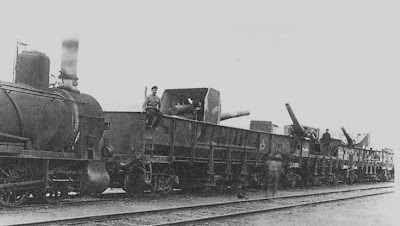
zırhlı tren 1918 ile ilgili görsel sonucu
         White Russian armored train, circa 1918-1919.

3-      A mandatory order was given for the 300-strong ‘organization 
battalion’ to come to Daşlagar and there, together with local forces, to
destroy the Yeni Boynak rail line to prevent reinforcement troops from
coming from Petrovsk (this movement did not happen.) The
‘organization battalion’ will probably arrive in Daşlagar on 20 October
(it did not come on that date or thereafter.)  Our force of about 1,000
armed men, under the command of a regular army officer, assembled
at Levaşi on 17 October.  This force’s commander, Cavalry Colonel
Kemal Bey, advised that the troops departed Levaşi  on 19 October
and would begin to engage the enemy at Paraul.  (There was no
engagement.  This force only was able to come after Petrovsk had been
completely surrounded.)

4-      The Koba Battalion, with a ‘seri sahra’ (rapid-fire field gun) and 
a mountain cannon, under the command of Ye14 Commander 
Saudeddin Bey was assigned to defend the coast.  I directly ordered
the Ye14 Commander to have the guns in place by this evening and 
have the battalion make the necessary pronouncements.

Tomorrow I will decide whether or not it will be necessary to allocate
a Ye107 battalion for the defense of the city’s surroundings, based on
how things go with the start of military operations.

5-      I will give the order to begin the attack separately.  Based on this
order I will give the order for the first attack and I will arrange for 
transport of  the troops under your command  who will move from 
the front along the rail line to Mahmedkala.

North Caucasus Commander

Yusuf İzzet

yusuf izzet paşa ile ilgili görsel sonucu
            Yusuf İzzet Paşa


This order was complemented by a second order, written below, which
was issued the same day after 08:45 hours:


1-      On 20 October, the Division will surround and take prisoner 
enemy elements found between the village of Mahmedkala and Derbent,
thus beginning the attack.  By evening the main force will have 
occupied Hacıkent and the cavalry will have occupied Kayakent.

2-      Division cavalry should extend its movements to the Daşlagar-
Kayakent line by evening and establish a communications post with a
force advancing from Daşlagar.(this force did not come and the 
communications post was not established.)

3-      I will announce the time for the start of the operation. In the event 
that telephone communication is cut off, the operation should begin at
7 o’clock.

4-      As of 8 o’clock on 20 October, I will be at the artillery observation 
location.

             North Caucasus Commander
                           Yusuf İzzet

//End Part VII//


TNT History Mini-Series: Islamic Army of the Caucasus in Dagestan (1918)/Part VI

//Ed. Note: Arrangements for the withdrawal of IAC's
15th Division from Dagestan to Batumi began in early
October 1918, but, based on the exigencies of the 
battlefield, IAC Commander Nuri Paşa and NCC chief
Yusur İzzet Paşa decided to keep the 15th Division in 
Dagestan for an assault on Petrovsk.

At the same time, the IAC Commanders conferred with
the leaders of the nascent Northern Caucasus Government,
which issued an ultimatum to Bicherekhov to vacate the
area. The IAC captured Petrovsk on 7 November, a week
after the Great War had officially ended.//


şimali kafkas cumhuriyeti 1918 ile ilgili görsel sonucu

Based on the telegram of 4/5 October from the Eastern Armies Group
Command, which included some of what was presented above,  it was 
essential that the 15th Division’s transport to Batumi begin immediately.  
In this regard, the Islam Army ordered the Division’s movement to 
Batumi on 6 October, in accordance with the following sequence:

(all departures from Bilecari, near Baku)

2nd and 3rd heavy provision wings  and  52nd mobile hospital;

1st heavy provisions wing, bakers wing, Ye15’s ‘kudretli’ battery,
health company;

Ye38 ‘kudretli’ mountain battery.

Ye56 from Yalama (the 3rd Battalion at Ganja was to be transported 
via the regiment’s train.)  The troops proceeding from Bilecari would 
be disembarked at Yalama and transported following the assembly of
the Derbent Detachment in the north of Derbent.

The Derbent Detachment was comprised of a battalion from Ye107, 2K 
cavalry and two Krupp guns.  The remaining elements of the Krupp 
battalion would be removed from Derbent and given over to the 
command of the 5th Division.

It was understood that  enemy attacks on the 15th Division’s position 
north of Derbent could not be repulsed by a weak detachment.  
Consequently, it was decided that the detachment would be made up 
of the entire 107th Regiment, a battalion from the 13th Regiment 
(for a total of 4 battalions), 42K cavalry and the entire Krupp 
mountain artillery battalion. 

Three provisions wings of the Division, the health company, the 
mobile hospital and one ‘kudretli’ battery were sent to 
Batumi from Bilecari and a portion from Yalama by 12 October , 
while Ye56 T3 went by means of seven trains to Batumi from 
Ganja on 17 October.   After the position north of Derbent was 
taken over by the Derbent Detachment, the remaining troops of 
the 15th Division were moved out from Yalama.

With the arrival of Ye107 on the morning of 12 October and the 
arrival of Ye13’s T46 on the morning of 13 October,  the 38th and
56th Regiments were completely replaced and command of the 
front was turned over to the Ye107 Commander.
kafkas islam ordusu ile ilgili görsel sonucu

Following the seizure of Derbent, Northern Caucasus Commander 
Yusuf İzzet Paşa and President Mecid Chermeyuf came to Derbent.
Islam Army Commander Nuri Paşa departed from Baku on the 
evening of 11 October to come to Derbent for discussions with 
İzzet Paşa about impending operations.  At 10 o’clock on the 
morning of 13 October,  a ceremony was held in front of the 
Derbent municipal building to mark the establishment of the North
Caucasus Government, amid the sound of cannon fire on the front,
and the new government’s flag began to wave over the city.

In the discussions between Yusuf İzzet Paşa, Nuri Paşa and Mecid 
Chermeyuf, it was decided that the location of the front just 3-4 
kilometers from Derbent constituted a great danger for the North 
Caucasus Government and, consequently, if the enemy force could
not be defeated it must at least be dragged further north.   But since
it was thought that the Derbent Detachment could not accomplish 
this duty alone, before moving out to Batumi the 15th Division 
would combine with the Derbent Detachment for an attack on the 
enemy .  Also included in the leaders’ discussion, was the element
of Bicherekhov being given an ultimatum by the President to vacate
land belonging to the North Caucasus Government, prior to the 
attack.  Before leaving Derbent, Nuri Paşa wrote the following 
memorandum to Yusuf İzzet Paşa and then left the same day to 
return to Baku:

To the Northern Caucasus Command
Derbent
13 October 1918

1.       The 15th Division is given over to your command until its 
departure from here.

2.       I request that with regard to the Division’s transport to Batumi,
 since there will likely be another order coming about a speedy 
transport, the envisioned movement occur as early as possible and
 that the remaining troops of the Division be ready to move.

nuri paşa ile ilgili görsel sonucu
              IAC Commander Nuri Paşa

Caucasus Islam Army Commander

Ferik (Division General)

Nuri

Based on this memorandum, Yusuf İzzet Paşa verbally ordered the
15th Division’s Commander to shelve the Division’s transport to
Batumi, assume command of the Derbent Detachment  and continue
the attack operation against Petrovsk.

During the operation from Derbent to Petrovsk, Yusuf İzzet Paşa was
 asked 3 times – on 17, 25 and 28 October  - by the Eastern Armies
Group  when the Islam Army’s 15th Division would begin it urgent
transport to Batumi, as previously ordered.  Although it is not known
when the 17 and 25 October telegrams reached Yusuf İzzet Paşa, it is
more than likely that these telegrams were late in reaching him because
 the Division and the Army Command were continually on the move
at the time.  Only the telegram of 28 October was replied to – on 1
November from Demirhan Şura: “I sent an enciphered message to the
General Staff on 26 October about certain important matters related to
the 15th Division and Ye107.   A proposal was also included with
regard to the enemy forces crammed into Petrovsk.  While waiting
for replies, it is currently impossible to spare even one man from the
Northern Caucasus forces but I hope that in a week units in question
will be free to leave.”

Under the conditions and situation described below, the 15th Division
reached Petrovsk with furious speed to continue the attack, following
the seizure of Derbent, and on 7 November the city of Petrovsk was
taken.

The battles and operations conducted between Derbent and Petrovsk
are presented in detail below.

derbent makhachkala map ile ilgili görsel sonucu
Derbent and Makhachkala (Petrovsk), at right on the Caspian 
Sea coast.

//End Part VI//