27 Haziran 2019 Perşembe

Chivalry Alive & Well in Akpınar District of Kırşehir


türkçe links to original Turkish article

(Hürriyet Newspaper, 26 June 2019)

kadınlara saygısızlık kırşehir akpınar ile ilgili görsel sonucu
Action taken by Mayor Rhett Butleroğlu, defending women's 
honor in Akpınar!

In Akpınar district of Kırşehir province, the municipality has punished
a shopkeeper by closing his shop for 15 days because he spoke
disrespectfully to some women customers (!).

rhett butler ile ilgili görsel sonucu
                                    Mayor Butleroğlu

The shopkeeper used 'slang' when talking to the women as they
shopped at his fruits and vegetables stand so they complained to the
municipality.  An Akpınar municpality fire truck has been parked
in front of the offending shopkeeper's store to prevent access. Taped
to the truck is the following message to citizens:

"This stand has been closed for 15 days due to disrespect toward
women."

kırşehir akpınar haritası ile ilgili görsel sonucu
      Akpınar district is at lower right, north of Kırşehir city.


TNT History Archives: American Scolds Britain's Islam Policy (1921)/Part I

//Ed. Note: This essay was written by an unnamed 
American official in 1921 and translated into Ottoman 
Turkish.  TNT has transcribed/translated it back to 
English.

The author is a scathing critic of the British and their 
policies vis-a-vis their Moslem subjects and details the 
sins of the English that are so well known today but 
which were effectively unknown or ignored in 1921.

Perhaps this American's distaste for British policy was
the consequence of a then still somewhat innocent and 
benificent American foreign policy.  Over time, though, 
America would come to essentially adopt these same 
British policies and tactics to fuel its worldwide 
expansion, in league with the United Kingdom, which
became the U.S.'s "sidekick" as time went on.

This first part deals with British involvement in Egypt
and Sudan. Subsequent parts will focus on Arabia,
Istanbul (under British occupation in 1921) and India.//

another critical American click here for another TNT
report in this vein.

British in Egypt click here for part 1 of  a 2-part TNT
series on Lord Comer in Egypt in the 1880's.

British in Egypt (part 2) click here for the remainder.

--------------------------------------------------------------------

england and islam 1920 ile ilgili görsel sonucu


Islam and the English

Author: A member of the General Staff of the United States 
Government

Translated from English

931 (1915)

Halep Takaddüm Printers

The Beliefs of the English

Mr. Charles Benetton, a correspondent for the ... newspaper in 
Paris, France, once said that English leaders and thinkers have 
left a legacy for the English nation.  For example, Gladstone 
advised that “someone else’s property should be taken and 
registered under an English name.”  And that “to be the lord 
of the people, sew discord among them.”   So the English take 
this advice as if it came from the Bible and act accordingly!

The aims and ideas that the English have about Islam can be 
summed up with these short sentences.  Anyone who has read 
world history or traveled to places like Egypt, India and 
Australia where the English rule has sensed this truth!  
Whenever the English want to separate a place or a people 
from the government and take possession, the first thing they 
do is sew discord among the inhabitants and tempt the 
ignorants with promises of independence and wealth and then 
succeed with false vows and bribes!   There has never been a 
time in history when a group or nation that was separated from 
its government by English deception and brought under 
English sovereignty has been successful in achieving their 
dreams and aspirations!

english opium egypt cartoons ile ilgili görsel sonucu


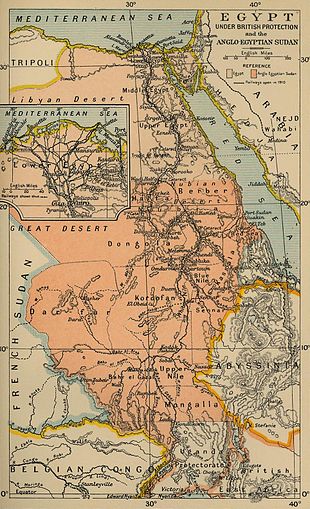
The English in Egypt and Sudan


The English have been ruling Egypt for 40 years thanks to the 
pretext of giving promises about independence and increasing 
wealth during the Arabi Paşa incident.  At that time, the 
English duped some Egyptian officials and used some ignorant 
people to get what they wanted for the English nation.  The 
English then occupied Egypt and fortified their positions.  

They began to rob the Egyptian populace of its wealth and, in 
fact, started to interfere in family and religious matters.  When 
the people of Egypt saw this they began to nurture a hatred and 
enmity toward the English and those who had enabled the 
English to enter Egypt. 

During the two trips that I made to Egypt I spoke with many 
Egyptians in Cairo, Alexandria, Zagazig, Tanta, ?Denhur?, 
Benha Kıyum.  (I went from Aswan to Khartoum and from 
Sevakin to the sources of the Blue Nile.)  I read the statistics 
and listened to people.  As a result, I, like everyone else, came 
to understand that English rule and administration in Egypt 
and Sudan is much more tyrannical that I had thought.

opera square cairo 1920 ile ilgili görsel sonucu

Four Million in Gold Stolen in One Year

Twenty years ago, through the intrigues of some English 
statesmen, a company made up of 4 or 5 Englishmen came 
from London to Egypt  and opened a bank in Cairo’s Opera 
Square.  The bank indicated that it had 4 million in gold as 
capital and showed many well-known stores, buildings and 
shops in London among its holdings.  In this way,  the bank 
sold one-year promissory notes worth 4 million liras to the 
public and farmers.  However, at the end of the notes’ term 
the bank was found to be closed.   

The note-holders went to other banks, wanting to sell their 
notes, but the other banks claimed to be officially unaware of 
the bank in question and so they could not accept the notes.  
The note-holders appealed to the English government and an 
English judge promised to find the culprits and punish them, 
along with having the note-holders’ rights upheld.  
Nevertheless, the matter remains unresolved to this day.  So 
one can understand how English slight-of-hand can 
manufacture such a major fraud.

english opium egypt cartoons ile ilgili görsel sonucu

A Policy of Spreading Amusement and Drinking

In order to keep the Egyptian people from getting involved in 
politics and administrative matters and to keep them distant 
from such things, the English had the Chief of Security Henter 
Paşa increase the number of drinking and pleasure clubs in 
Cairo, Alexandria and other places.  In fact, they filled the 
areas around sacred Moslem places like the Seydülhüsseyin 
and Side Zinep mosques and Cairo neighborhoods like 
Abbasiye, Nasiriye and Şire with houses of prostitution and 
drinking clubs.  Anyone who doubts this can visit these places 
and see with their own eyes.  

Hashish and opium increased and Henter Paşa just about gave 
official permission to the populace to use them, in the name 
of freedom.  According to information in the Almaktutuf 
magazine, in a 3-year period 1,500 youths in Cairo, Alexandria 
and Tanta alone died of alcohol and opium abuse.  Sir Eldon 
Gorst, who succeeded Lord Cromer, implemented a light 
penalty for the import of  opium, to the extent that he could, 
as the result of inistance by the press. 

Loss of Five Million Liras-worth of Cotton in One 
Year

During the time that Lord Cromer administered Egypt and 
Sudan, large organizations like Hizbülvatan formed and 
created a groundswell for independence and for the departure 
of the English.  In response, Lord Cromer waged an economic 
war on the populace and implemented ways to make the people 
even more helpless and poor.  For example, large cotton factory 
directors in England colluded to have their cotton imported 
from Australia, rather than from Egypt.  (Of course, Britain’s 
representative in Egypt, Lord Cromer, was aware of this.)  

Consequently, at the beginning of the cotton season, when the 
factory directors did not present requests for Egyptian cotton 
the value of Egypt’s cotton plunged drastically.  So that year, 
Egyptian agriculture and its people lost 5 million liras.  (An 
Italian citizen named Mr. Jazrulu working in the Agriculture 
Ministry, compiled statistics showing that in that year a 
majority of farmers pawned a third of their fields to the 
English government bank.)!  As of that year, Egyptian fields 
began to be registered so Gladstone’s first recommendation, 
as mentioned earlier in this pamphlet, had been successfully 
implemented in Egypt by Lord Cromer!

Marginal note: With regard to this anecdote, either the writer 
or the translator missed something.  Because when this 
incident happened in 1907 and the Egyptians lost 5 million 
liras because of this financial crisis generated by Lord 
Cromer’s pronouncements and slanders, which, by the way, 
earned him the hatred of the Egyptians,  it wasn’t just the 5 
million liras that were lost.  The crisis cost the Egyptians 
hundreds of millions and many Egyptian merchants and 
farmers went bankrupt because of it.                           

anglo egyptian sudan 1920 ile ilgili görsel sonucu

The Current Situation in Egypt and Sudan
Over the course of time, the people of Egypt came to 
understand the English aims and ambitions in their country.   
The 40-year English occupation resulted in the denial of 
independence, the increase in poverty and loss, the absolute 
absence of gold and the population’s reliance on paper money.  

In addition, illnesses increased because of the prevalence of 
alcohol and opium abuse.  The number of schools was 
diminished because of budget problems in the Ministry of 
Education.  And as the tyranny and oppression swelled, 
Moslem clergy in Egypt were sidelined as the government
interfered in family matters, with a number of Moslems being 
converted to Christianity.  The resulting hatred and enmity 
prompted by this oppression sparked the formation of many 
secret and open groups in Egypt that used propaganda and 
newspapers to incite the populace toward rebellion and 
independence.  Every effort was made to rid Egypt of the 
English, for the people of Egypt and Sudan came to realize 
that as long as the English remain in their countries they will 
never achieve independence.  

For this reason, at the end of the Great War two years ago the 
Egyptians rose as one in revolt.  Eleven million Moslems and 
one million Coptics sacrificed their lives and property together.  
They spared no effort to expel the English from their countries 
and gain freedom for the world of Islam from English and 
Western servitude and imprisonment!
  
Based on the premise of “East for the easterners and West for 
the westerners”, up until today, and as of the date of the 
publication of this pamphlet,  significant bloody uprisings and 
revolts are percolating and boiling up throughout Egypt. 

//Ed. Note: Of course, it wouldn't be until 1956 when Egypt
gained independence from Great Britain.//

//END of PART I//


26 Haziran 2019 Çarşamba

TNT POW Reports: Turks in Greek Hands (1920-1923)/Part XIII

//Ed. Note:  This POW's report is unique - he was captured
and transported to camps in Greece with his wife and child,
but the child died in Thessaloniki (Salonica).// 

bursa yunan işgalı 1922 ile ilgili görsel sonucu
Greek soldiers with local Bursa children in front of the Bursa
municipal building in March 1922. The Turkish Army 
liberated Bursa on 11 September 1922.


Captain Tahir Nadi’s Statement:

A number of soldiers from the entourage of Gendarmerie Commander 
Papaerki raided my house on 29 August 1922 and without letting me get 
dressed – I was taken in my nightshirt – I was brought to the occupation 
command office.  Without saying a word, the chief of staff beat me 
continually for four hours and then I was thrown in the basement.  I 
stayed there for 4 days without food or water and I was prevented from 
sleeping as they chanted “we will take you for execution”.  

On the fourth day, when I was brought to the Gendarmerie office I 
found my wife there with our 6-month-old child in her lap.  Three 
women and their children, who lived in the same house as us, were 
brought, as well.  After we were each interrogated for hours,  they 
took me to the Tahtakale medrese (religious school in Bursa).  

The degradation and the rifle butt blows inflicted by the Greek soldiers 
I encountered along the way and in the custody house in were beyond 
unbearable.   28 people, who like me had been condemned to death, 
were stuffed into a room that could accommodate 5.  Then I was stripped.  
The day I was removed from the dungeon my arms were tightly bound 
and I was included with about 800 others,  who were all bound, in front 
of the old government house.  I was at the head of the column, naked and 
barefooted, and my wife, with the child in her arms although they were 
bound, and a sack under her arm, was at the back of the column. 

 bursa mudanya haritası ile ilgili görsel sonucu

We walked until morning and came to Mudanya, where we boarded onto
a ship.  We were prodded by rifle butts into the holds and the hatches 
were shut.  The interior of the ship was as hot as Kerbela and a glass of 
water cost 25 francs.  I was little more than a skeleton when I set foot on
land at Salonica.  We were transported to Profit İliya Prison. While I was 
kept naked and manacled in misery in this new prison, my wife could 
not bear the hardship and difficulties  so she was put in a hospital.  My 
child was turned over to the Islamic Community for care.  

The day after we were transported to the Beyaz Kale (White Fortress), it 
was made known that we would go to Athens.  I had to find out about the 
condition of my wife and son. When the response I received was “your 
wife has yellow fever.  We will send her later.”, I resisted the order and 
was put in with 30 other people, whose cases would be heard over there. 

  white fortress salonica 1920 ile ilgili görsel sonucu
The White Fortress of Thessaloniki 
(Salonica)

A week after the prisoners were moved I learned that my child had died.  
My appeal to attend his funeral was denied.  One day, together with my 
wife and 3 others, we were put into a freight train wagon and transported
to Larrisa.  When the prisoner officers at the garrison there saw my 
wife’s desperate condition they contacted the Larissa muftu (Moslem 
religious leader) and he signed as a guarantor so she could be moved to 
his house.  The situation of the soldiers held prisoner there was quite 
deplorable.  They were continually beaten in the stables where they 
were housed.  They were degraded and transported to work at forced 
labor from morning till evening.  There were those who died from the 
blows they suffered. 

larissa greece map ile ilgili görsel sonucu
The writer and his ill wife were transported by train from 
Thessaloniki to Larissa (red dot).

//END of PART XIII//


"Shaikh Shack" Hotel Left to Rot in Marmaris


türkçe links to original Turkish article

(Milliyet Newspaper, 25 June 2019)

şeyhin oteli kaderine terk edildi thani marmaris ile ilgili görsel sonucu
   Looks like he's had quite a few trips to the Shake Shack...

Shaikh Nasser Ahmed Ali A. Al Thani of the Qatari royal family
bought the waterfront, 189-room, 5-star Munamar Beach Hotel in
İçmeler village, 11 kilometers from Marmaris, in 2010 for $15 million.
Shaikh Nasser wanted to close off a portion of the shore and make the
hotel a summer resort for his family but the İçmeler municipality
refused. 

In light of the refusal, the hotel was rented to the South Star Hotel
Company for 5 years at $1 million per year and the company ran the
hotel for 7 years.  Last July, Shaikh Thani wanted to raise the rent to
$1.2 million but the company wouldn't accept the increase. The
disagreement continued until a court ordered the hotel was emptied on
21 July, forcing 400 tourists to leave suddenly. 

In the aftermath, the hotel has been left to rot, prompting local
tourism officials to remark that "when this hotel was first purchased
we were thrilled, thinking that foreign investment like this would
raise quality and value.  In fact, just the opposite has happened,
unfortunately.  The forced eviction of tourists last July was widely
covered in the European press.  Now the hotel is in ruins.  The
owner (Shaikh Nasser)'s asking prices for sale and rent are much
too high."

içmeler marmaris haritası ile ilgili görsel sonucu

25 Haziran 2019 Salı

Stick & Stones May Break My Bones, But Words Can Break My Heart

türkçe links to original Turkish article

(Sözcü Newspaper, 24 June 2019)

marital dissatisfaction ile ilgili görsel sonucu
                 M.Y. and Ş.Y. at their best - mouths closed.


M.Y. applied to family court to open a divorce suit, claiming that his
wife Ş.Y. continually insults him by calling him a 'şizofren'
(schizophrenic). In M.Y.'s view, this has caused incompatibility and
cultural differences between the couple  M.Y. asked the court to award
him child custody, along with 40,000 TL (about $6,500), as
compensation.

For her part, defendant Ş.Y. disputed her husband's accusations, telling
the court that "the plaintiff  (M.Y.) continually insults me by calling
me 'salak' (feeble-minded), 'manyak' (maniac), 'terbiyesiz' (uncouth)
and 'şerefsiz' (dishonorable).  I want the court to deny the divorce
request!" (!)

The court ruled that both sides were equally at fault and granted the
divorce, but denied M.Y.'s request for compensation.   Ş.Y. appealed
the court's ruling but her appeal was refused, with the higher court
noting that a couple that calls each other "şizofren, salak, manyak"
shouldn't live in the same house and are better off getting divorced.

sticks and stones may break my bones but words will break my heart ile ilgili görsel sonucu


24 Haziran 2019 Pazartesi

TNT POW Reports: Turks in Greek Hands (1920-1923)/Part XII

//Ed. Note: This POW was captured east of Afyonkarahisar,
which was occupied by the Greek army from April 1921
until August 1922, and spent most of his captivity on 
Lefkada Island - see previous installments from this TNT 
series for more on Lefkada.//


afyonkarahisar kütahya izmir haritası ile ilgili görsel sonucu
This POW was taken from Afyonkarahisar to Kütahya and 
from there to Izmir, before being transported to Athens and 
Lefkada Island.


The Statement of Lieutenant Kadir, son of Şükrüof the Hamzaoğullar 
from Yeni Cami Quarter in Izmir, who has returned from captivity:

I was taken prisoner while injured, along with two soldiers whose names 
I do not know, on 15 July 1921 in the vicinity of Nahuçalı, east of 
Afyonkarahisar. Subsequently, we were transported to Piraeus, Athens 
and the fortress on Lefkada Island, where there were about 270 prisoner 
officers.

During our transport from Greece,  I became aware that there were about 
600 civilian prisoners on Corfu Island and that their situation was quite 
deplorable.  I do not know who they are or where they are from. Each 
day 50-60 of them die from illness.  In Izmir I heard that a ship is being 
sent to return them to their hometowns.  I have no information about how
many prisoners there may be on other islands.

The only person who died in the fortress where we stayed was a 
pharmacist captain.  His particulars have been provided to the POW office 
in Izmir by Major Ali, who was the senior officer at Lefkada Island.  He 
died from bleeding hemorrhoids. 

corfu lefkada map ile ilgili görsel sonucu
          Corfu and Lefkad Islands on Greece's west coast.

Officers were given just 450 francs for food and salary.  Clothing was 
included in this amount.  The soldiers’ food was not good.  The treatment 
we received was very bad.  We were subject to all kinks of torture and 
insult.  We complained about the food and to have our salary increased  
but these complaints fell on deaf ears.

I fell into the hands of the Greeks while wounded in the vicinity of 
Nahuçalı.  They dragged me to the rear and while I was there they 
subjected me to every kind of torture, including insults and beatings.  
They did not bring me to a hospital. I learned that there were many others 
like me who suffered the same treatment on the road.  They killed a 
majority of the prisoners, the wounded in particular, and I personally 
witnessed this.   We waited at Kütahya for many days in this atmosphere 
of filth and degradation.  Finally I was taken to Izmir and from there, 
together with 30 officers, to Piraeus.  I do not know their names.  

The same degradation and torture continued.  In fact, at Yazapikmaz 
Prison in Athens we were purposely left hungry for 3 days.  We stayed 
in this prison for 15 days and were then transported to Lefkada Island, 
where we spent 20 months in the fortress. Here, as well, the Greeks 
inflicted every kind of degradation and torture on us.  We weren’t the 
Greek government’s prisoners, but rather, a sergeant’s.  From time to 
time the local Greeks would come to the fortress and, thinking that the 
Greeks were going too easy on us, would incite our captors to be even 
more brutal.  Finally,  two months ago, because of the prisoner 
exchange, we were rescued from this misery. 

//END of PART XII//


23 Haziran 2019 Pazar

When Turkish Camels Ruled the American Wild West


türkçe links to original Turkish article

(Hürriyet Newspaper, 23 June 2019)

U.S. Army Camel Corps click here for background.

southwest passage ile ilgili görsel sonucu

//Ed. Note: the 'Storyline' for "Southwest Passage":

Edward Beale is in charge of finding a shorter trail across the American 
desert and to also test the practicality of using camels in the west in 
this 3-D western. (An actual test once conducted in the Big Bend area 
of Texas.) Clint MacDoanld, a bank robber one jump ahead of a posse, 
joins the caravan by posing as a doctor. His sweetheart, Lilly, also 
comes along and signs on. There is a whole lot of footage of the 
grueling trek across the desert, but it begins to move when mule-
skinner Matt Carroll becomes aware of MacDonald's true profession 
and he wants the gold from the bank robbery. The Apaches have 
shied away from attacking the train, because of their fear of the 
camels, but a camel dies and the jig is up as they lose their fear 
and here they come. //

philip tedro ile ilgili görsel sonucu
                 Hacı Ali - Hi Jolly


The exploits of Ottoman camel shepherd Hacı Ali, known in Arizona
as 'Hi Jolly' when his unusual name was mispronounced, gained fame
in films - "Southwest Passage" (1954) - and in the comics - Lucky Luke
(Red Kit) (1947). 

Dr. Ali Sönmez, an academician at 18 Mart University in Çanakkale
has researched 'Hi Jolly' by looking through Ottoman archives for
documents related to him.  According to Dr. Sönmez's research, in the
aftermath of the Mexican War (1846-1848), America acquired
Arizona, California, Nevada, Utah, Colorado and New Mexico.  In
order to develop this mountainous desert area, the American government
decided to use camels, known throughout the world as the 'ships of the
desert'.

mexican war map ile ilgili görsel sonucu


In 1855, with permission from Congress, an American delegation led
by Henry C. Wayne went to Turkey to ask Sultan Abdülmecid for help.
The Sultan agreed and between 1855 and 1857 more than 70 Turkish
camels were sent to America.  But with the outbreak of the American
Civil War in 1861 some of the camels were sold and the camel unit
was disbanded. 

With regard to 'Hi Jolly', Dr. Sönmez explained that "the best known of
the 5 shepherds who went with the camels to America was Hacı Ali,
an Izmir Greek who converted to Islam.  For years Hacı Ali served as
a camel rider in the American camel unit  but since the Americans
couldn't pronounce his name properly it became 'Hi Jolly'.  Hacı Ali,
who given name was Philıp Tedro, settled in Quartzite, Arizona and
died there in 1902.  A monument to 'Hi Jolly' was erected in Quartzite
in 1935 and he is remembered there every 10 January with a festival
in his name."

 philip tedro ile ilgili görsel sonucu

camel cigarette ile ilgili görsel sonucu
                            Hmmm, coincidence?...