4 Ağustos 2019 Pazar

Brain Surgery 2,200 Years Ago in Euromos


türkçe links to original Turkish article

(Cumhuriyet Newspaper, 3 August 2019)

euromos 2 bin yıllık beyin ameliyatı izleri ile ilgili görsel sonucu
       Costly operation - no coverage, pre-existing condition.

At an excavation in Euromos Antique City in Muğla, evidence of
a male's brain surgery has emerged from one of the graves found there,
dating back 2,200 years. 

Abuzer Kızıl, an academician from Muğla Sıtkı Koçman University,
explained that "we can say that the evidence of brain surgery on a skull
found in a grave at Euromos, along with surgical implements, sheds
light on medical history 2,200 years ago.  The skull upon which the
surgery was conducted belonged to an adult male.  We think that the
surgery related to a headache or some other problem in the man's skull."

euromos 2 bin yıllık beyin ameliyatı izleri ile ilgili görsel sonucu
                                         Dig We Must

Kızıl noted that examinations of the skeleton and bones also revealed
some significant information: "we found important information about
the reasons for deaths of the Euromos population, their health problems
and anatomical structure.  Generally speaking, we can say that the
Euromos people were health and sturdy but, of course, were subject
to contagious diseases."

Nazlı Aktaş, from Gaziantep University's Anthropology Department
is contiuing the skeleton studies.

euromos haritası ile ilgili görsel sonucu


3 Ağustos 2019 Cumartesi

TNT POW Reports: Turks in Greek Hands (1920-1923)/Part XXVIII-B

//Ed. Note: Pharmacist Muzaffer (Akpınar) of Edremit 
continues with his detailed report about Greek atrocities,
up to the point where he himself is detained and tortured,
the gruesome details of which will appear in Part-C of this
series.//

muzaffer akpınar kütüphanesi fotoğrafı ile ilgili görsel sonucu
               Muzaffer Akpınar Library in Edremit today.


I feel it is my national duty to relate a number of incidents that I 
personally witnessed in our vicinity:

Bloody posts in cellars:

A young friend from the neighborhood was returning to his home one 
night at 8.30 o’clock when he was stopped by a Greek patrol.  They said 
to him “Don’t you recognize the law of the Greek government?  What 
are you doing on the street at this hour?”  The poor fellow wanted to say
 in reply that the hour was still early, but instead he was hit with rifle 
butts and dragged screaming and moaning to the outpost, where he was 
stripped naked and, of course, his money, watch, ring and other valuables 
were taken from him.  The threw him in the cellar and beat him violently. 

The poor fellow thought that perhaps an officer might intervene and have
him released and he persuaded one of the soldiers to summon the officer, 
with the promise of giving the soldier 10 lira the next day.  Two hours 
later the officer arrived.  But with unbridled rashness, the officer said 
threateningly “the Turks in this village still haven’t come to their senses?”  
He then proceeded to beat the young man with a whip and his boots to the 
point where the the blows administered by the soldiers and gendarmes 
were surpassed.  The young man passed out and they left.  The next day t
hey did the same thing all over again.  This went on for three day until he 
was released with a broken arm.  Three months later his situation 
improved with continuous treatment.

mustafa kemal edremit ile ilgili görsel sonucu
Mustafa Kemal (Atatürk) in Ergama village en route to Edremit.
8 February 1923.


An official named Nazım Bey named his child “Mustafa Kemâl”.  He 
was picked up at the coffeehouse before prayers that night and brought 
to the outpost, where they said to him “Don’t you know that Greece is 
the master of not only Anatolia but the entire world?!  When will you 
forget the name M.K.?!”  Then the atrocities began.  He was tied to a 
post in the basement and beaten.  It got to the point that he was ready to 
disown his child but they would not relent.  Every part of his body 
swelled and he became unrecognizable.  They held him for a couple of 
days and then brought him to his home at night.  A month later he was 
seen at the market with a much-changed visage, his head and eyes 
bandaged, as he quivered while leaning on a cane.

Should an Animal Made to Dance at the Market?

Another one of our youths was riding on a lovely animal through the 
market area when it got spooked by the sound of the carts there. 
Greek officer who saw this apprehended the youth and brought him 
to the outpost, saying “Don’t you know that a Turk cannot act haughtily 
in a place where Greeks are?!  Why are you having your animal dance 
in the market?!”  The poor youth intended no such thing, exerting all his 
might to prevent the animal from falling and causing an accident. 

Despite saying this, though, he was ignored and thrown in the cellar, 
being beaten there until morning.  They put hot boiled eggs in his 
armpits and he fainted immediately.  His armpits swelled and because 
of damage to either his nerves or arteries he can no longer use his arms.  

The Greeks entered homes with the fiendish pretext of searching for 
weapons and inflicted degradations on the people in the city and the 
villages, having a detachment of soldiers numerous enough to fill a 
church beat them. A few people died and a few others were crippled.  
Since there are not enough pages to chronicle the atrocities the Greeks 
committed one by one, and because it would take a committee days, 
weeks and even months to record all these Greek depredations, it must 
suffice for me to write just a few examples of Greek incidents of torture.

Türkmenoğlu Ahmed Ağa was killed on some pretext.  Four people in 
Hamdi Bey town, whose names I do not know, were murdered, four in 
Küçük Agunaya, and 5 in İnönü.  An arm and a leg of Cebeci Ahmed Bey 
were broken by the filthy boot of a Greek officer.  Köreli Ali Bey was 
hung by his feet for 6 hours from a plane tree in the market and beaten 
with bats all the while.  The local Christians served as guides for the 
Greeks in regard to all these incidents and engaged in a despicable 
competition to join in the inflicting of these tortures.  

İlgili resim

Hot

After touring all the villages one by one over the course of a few months, 
I was able to compile incidents such as 20 little girls disappearing just 
about every day, women’s honor being attacked in the presence of their 
family members, hot iron pressed on the faces of brides because of greed 
for their money.  The men in the vicinity of the towns and villages were 
killed for any kind of reason or pretext. 

With the idea of establishing a government in Anatolia where the 
populace would be obedient to them, the Greeks implemented a daily 
litany of horrors but realized that this would not suffice to make the 
people succumb to Greekness.  So the policy of destruction became 
all the more apparent and comprehensive, resulting in the arrest of any 
youths, intellectuals and influentials they encountered.  Three days 
before this new policy was implemented, the Greeks emptied the boys 
school, on the pretext that it would house their soldiers, but instead 
turned it into a prison. 

The arrests began on Wednesday, 13 April 1922, and within 8 days 
40 people were arrested from Edremit and about 300 people were 
rounded up from the villages.  I was one of the 40.  The populace, 
already terrorized, was frightened further by the arrests and closed 
their shops, reluctant even to come out of their homes to go to the 
market or walk the streets.  Only those wearing hats and caps (non-
Moslems), and a few wearing the fez, were out and about.  

Considering this quietude and sparcity to be evidence of their success, 
the Greeks neglected the other aspects of their program and 
concentrated on interrogations of notables by a random officer they 
appointed.  In these initial interrogations, I was brought before this 
despicable officer, whom this fiendish and horrific hearth had created.   

//END of PART XXVIII-B//    

2 Ağustos 2019 Cuma

Armored Car Heist With B-Movie Possibilities


türkçe links to original Turkish article

(Milliyet Newspaper, 31 July 2019)

armored car robbery ile ilgili görsel sonucu
Ekinci had visions of silver screen fame.


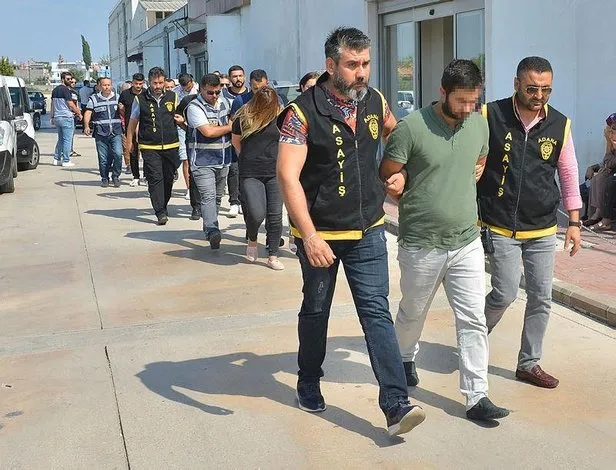
In Adana, armored car security guard Burak Ekinci (29) stole 4.795
Euros (about 31.5 million TL) during a money transfer on 25 June
but he was captured in his hideout the day before yesterday. The
incident occurred on Karataş Avenue in the Yüreğir neighborhood
of Adana.

Ekinci, the security director (!) for a logistics and security firm that
transfers money for banks and businesses, was in the process of
transferring 9 million Euros with his team when he said to the others
with regard to two of the nine bags they were getting ready to load
onto an armored car: "It seems there's some money missing in these
ttwo bags. You go ahead and get the others while I check these."

Returning to the armored car with the 7 other bags, the team saw
that Ekinci wasn't there.  After waiting a bit, they realized that
the money had been stolen and called police, who then reviewed
video footage that showed Ekinci absconding with the money in
a luxury automobile.


          Casting call.  Leading man Ekinci in front.

Police mounted an investigation and arrested Atilla Can Ö, Mehmet
G., Ahmet K., Engin K., Tuncay B. and Abdulsamet B., the first
three of whom were jailed after interrogation, while the others were
released under judicial supervision.  Brothers Gökhan B. and Sercan
B. were captured at their hideout, where police found 73,000 Euros
and 19,500 TL.

Ekinci, however, remained at large for 33 days until he was caught
at his hideout in Sarıçam district of Adana.  Under questioning,
Ekinci said that he had given 4.645 Euros of the stolen money to
Mehmet G. and Hasan B.  Of the remaining money, through a cousin,
Ekinci gave 20,000 Euros to his relative Jale E., 22,000 Euros to
Berkay E., 34,000 Euros to his neighborhood friend Serdal K.,
22,000 Euros to Tolga Y. and 5,000 Euros to Hasan Y., in whose
home Ekinci was hiding out.

Ekinci told the recipients that "I'm giving you this money but if I
get caught and need money for lawyers and legal fees I want you
to give it back to me." (!)  At first, while Ekinci was holed-up in
a shack in the woods, he was too scared to leave and had someone
leave stale bread at the door, which sustained him.  Subsequently,
he went to the home of a relative.

The suspects had originally planned to conduct the heist on 28 June,
the last work-day of the week, and then flee Turkey over the
weekend.  Because of internal company accounting actions, though,
they moved up the date of the heist to 25 June. 

Ekinci, Jale E. and Serdal K. were jailed, while Berkay E., Ayhan Ö.,
Tolga Y. and Hasan Y. were released under judicial supervision.

adana haritası ile ilgili görsel sonucu
The heist occurred in Yüreğir, just southeast of downtown
Adana.  Ekinci hid out for a while in the woods of nearby 
Sarıçam district.


TNT POW Reports: Turks in Greek Hands (1920-1923)/Part XXVIII-A

//Ed. Note: Edremit pharmacist Muzaffer Süreyya was,
according to both his friends and the Greeks, the ringleader
of the anti-occupation movement in Edremit.  His  10-page
report (other POW reports were 2-3 pages, at most) is a
very well-written and passionate denunciation of the 
Greeks and the occupation.

edremit haritası ile ilgili görsel sonucu

Here is a brief biography of Muzaffer bey (the surname
Akpınar was adopted in 1935):

Muzaffer Akpınar (Rhodes 1891–Edremit 1955), a 
graduate of 1913, and was one of the most active 
pharmacists in the history of Edremit. 

During World War I he was Health Officer for the 
Control of Infectious Diseases in Damascus and Antioch, 
and pharmacist of the Nablus (Palestine) Surgical Hospital. 
He volunteered for the National Army (Kuva-yı Milliye), 
and organized the Committee for the Defense of the Rights 
of Anatolia and Rumelia in the struggle for liberation, for 
which he was decorated with the red-ribbon Turkish 
Independence Medal. M. Akpınar founded the Edremit 
Idman Yurdu sports club, and served as Member of 
Parliament for Balıkesir for four terms.//


The memories of captivity of a pharmacist from Edremit:

It is impossible to either enumerate or describe the unbearable tyranny 
and torture inflicted without exception on men, women and children 
during the Greek occupation.  The pages of history will be blackend by 
the vicious atrocities that are unique to the Greeks.

How the Greeks İmplemented Torture:    
                
Included among the types of brutality that the Greeks saw fit to use 
were burning people in fire, impaling children with stakes, having 
women and children get bloody by running through an area of grain 
sprinked with thorns, subjecting poor villagers to death by herding 
them through a gauntlet of bats, rifle butts, boot and spur kicks at the 
brutal whim of an officer or a sergeant or even just a soldier.  

Any matter – no matter how insignificant – would be punished by 
hanging someone by his feet and beating him until he vomited blood, 
pouring hot olive oil on one’s stomach, nailing needles between flesh 
and fingernail, pulling out fingernails, pressing a red-hot bar or other 
metal part to various parts of one’s body, putting boiling hot eggs 
under one’s armpits – these were the main duties that kept the Greeks 
busy at the military occupation offices and the Gendarmerie outposts.  
Even a villager from the most remote place witnessed the 
implementation of this policy of destruction the Greeks inflicted in 
Anatolia.

In the event that a complaint was filed in their offices and facilities 
about the crimes the Greeks committed they would say “if a soldier 
did it we won’t interfere.  We can’t tell them what to do.”  If a 
complaint was filed at a Greek military facility the response would be 
“who taught you such slander and who incited you this way?”  and 
the complainant would be subjected to one of the collection of 
tortures I enumerated above. 

Again, whether the punishment was severe or light would depend on 
the whim of the concerned officer or sergeant.  Every young person 
waited each day for a calamity to befall him.  Anyone the Greeks saw 
as being sturdy and free were beaten down by the vile initiatives of 
their despicable administrations.    Or if they determined that the youth 
was no longer a threat, they would simply crush and kill him.  If 
personal threats did not bear fruit, then measures would be taken 
against even the youngest of one’s family.  For days on end their lives 
would be made miserable in the occupation offices and the 
Gendarmerie outposts.  Force and pressure would be applied with no 
let up.  People would be banished, homes destroyed.  In short,the 
Greeks would do anything and everything. 

greek occupation of anatolia ile ilgili görsel sonucu 
  
Youths Were the Greeks' Greatest Enemy:

“You will not name your newborn children after any Turkish heroes.”   
So after they saw that a number of children had been named Mustafa 
Kemâl they arrested the families on one pretext or another.  As they 
explained the arrests with fabrications and lies, they made know their 
dislike for the name Mustafa Kemâl and shamelessly proposed that the 
child’s name be changed.

Having money and being rich constituted a serious fault.  Every day 
the Greek Gendarmerie and military would visit markets, factories, 
shops and any other kind of commercial place to see what they could 
get.  They had themselves invited in and talked about their need for 
clothes and boots.  These dogs, who were used to frequenting the cafés 
in an apron and sandals to work as waiters, would make the merchants 
outfit them in pants made of English fabric, the most elegant suits and 
boots polished with varnish. 

In order to take care of any other needs, they would hit up another rich 
person the next day.  So no one would let on about having money, 
wouldn’t wear anything chic or nice and avoid riding a valuable animal.  
In fact, people were careful to not even carry a set of beads or a nice 
cigarette holder.  Otherwise they would fall victim to the preying touch 
of those voracious, insensitive hands.  Nothing could be said about it.

The martial law command decreed that no one could be on the street 
after 10 o’clock, European time.  But those who come out of the mosque 
after prayers before 8 were stopped and beaten in basements for a few 
days.  The situation came to the point where you would be taking your 
life in your hands to go visit a neighbor at night.  The biggest pretext the 
Greeks had for entering and violating the sanctity of the home was to 
search for weapons.

In short, the word “Greek” carries with it the meaning of the most blood-
thirsty, violent, vilest actions ever witnessed by mankind that resulted in 
stripping, robbing, beating, striking, killing and the breaking arms and 
legs. 

//END of PART XXVIII-A//


1 Ağustos 2019 Perşembe

Brits Have a Turkish Bee in Their Bonnet


türkçe links to original Turkish article

(Hürriyet Newspaper, 31 July 2019)

türk arıya kıymayın ile ilgili görsel sonucu
                                    Beware the Turk!


A family in Bristol, England, noticed that a bee was living in their
backyard and had built a nest in their home.  The matter is being
referred to as "The Turkish Bee" and the UK's environmental agency
DEFRA (Department for Environment, Food and Rural Affairs) has
warned that the bee could damage the ecosystem and should be killed.
Experts say that non-indigenous bees could spread killing viruses
among the native English bees.

The bee in question - the 'Osmia Avosetta'-type found only in Turkey
and Iran - has not yet been caught but, nevertheless, continues to
build its nest (!).  After the Toy family returned from a vacation in
Turkey they began to see the cacoons of a foreign bee in their yard.
Ashley Toy (49) explained that the family researched the very odd-
looking bee and learned that it was an Osmia Avosetta.

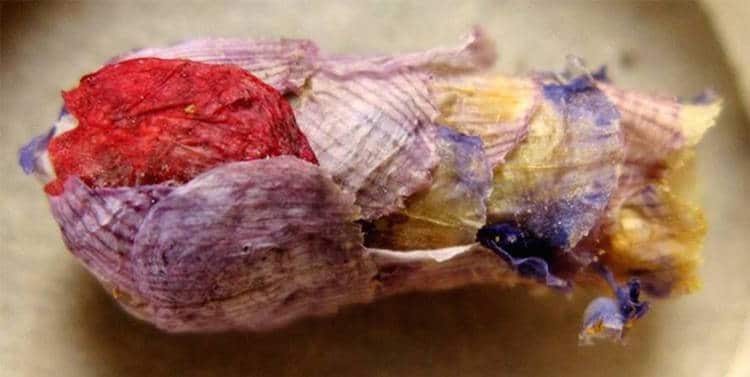
Osmia Avosetta Bees Nest Flower Petals
Osmia Avosett is newly-famous for making colorful nest from 
flower petals. 

"wanted" bee builds pretty nests click here for details.

Ashley's husband said that "the bee comes in the house every
morning when we open the door. After that it comes and goes. I've
never seen anything like it!"

Nevertheless, Tim Lovett, the former chief of the English Bee-
Keepers Association, has said that "this won't cause a problem.
In order for it to be dangerous the bee has to create a place where
it can reproduce and the chance of this happening is very low. I
understand that the English officials want to give the impression
that they're doing something about this but I don't see any danger
here."

In England in 2004, officials asked citizens to inform them about
foreign bee sightings because donkey bees from Asia had been
seen in the environment.  In the past, donkey bees that have come
into the country have harmed honey bees, which are endangered.
Consequently, any "foreign bee" incidents are taken very seriously.

bristol england map ile ilgili görsel sonucu


TNT POW Reports: Turks in Greek Hands (1920-1923)/Part XXVII-C

//Ed. Note: In this last portion of his report, Edremit lawyer
Faik Kemal becomes an intelligence officer, providing
unique and interesting information about the underside of
Greece's hostile activities toward Turkey.//

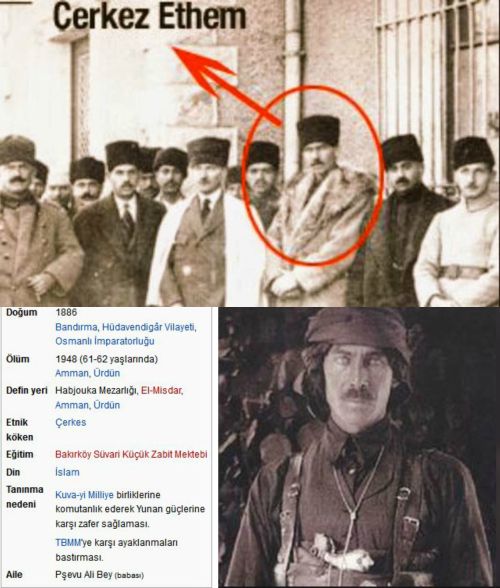
çerkes ethem kardeşleri ile ilgili görsel sonucu

Çerkes Ethem with Mustafa Kemal (Atatürk), prior to
going over to the Greek side.


According to what we have heard about gang organizations, there is a 
military wing of the Çerkes (Circassian) and nationalist organization 
under the purview of the Bursa governor named Ziyur, such that vile 
characters like Çerkes Ethem and his brothers Eşref and Çerkes İbrahim, 
along with the Balıkesir Gendarmerie company commander Sami, and 
Çerkes Şevket are under this command.  In fact, we have heard that for 
the first time Çerkes Şevket went to Anatolia and  has been able to 
conceal himself.  In particular, I have heard that Çerkes Şevket has 
relatives living in our district.  Their activity center is Midilli and Sakız 
and Sisam islands are branches. The boldest of these gangsters are 
Şevket, İbrahim and Eşref, who escaped from Edremit and they are in 
contact  with people on Midilli like Dr. Kalpolip of Edremit, who is the 
brains of the revolutionary committee on Midilli. 

We came to know about these things as the result of the revelations of
a Greek by the name of Horanlı İpokrad who was thrown in prison by 
the revolutionary government recently and who is famous for both 
being a Greek victory propagandist and a sworn enemy of the 
revolutionary committee.

All of the refugees get good treatment from Ziyur Bey and are put to 
work to cause damage to the Turks, based on their capabilities.  With 
regard to prisoners who are cooperating with the Greeks, there is a 
person named Bandırmalı Ziya, who is currently a policeman in Izmir, 
and who has done all sorts of horrific things as a first sergeant in the 
civilian prisoner company, as well as Boyabatlı Mehmet Lusi, the first 
sergeant of the 4th military company, who spied on the prisoners and 
is famous for his maltreatment of soldiers.   

There is a despicable character named Mehmed Bey, a Georgian, who 
served as an officer in the National Independence Army at Karamürsel, 
and another Georgian of bad character named Mehmed Ali, who was 
the (Afyon) Karahisar governor’s Greek translator.  A scoundrel named 
Ahmed Faik tried to apostatize men to change religion and Mehmed and 
Mehmed Ali put on Greek captain’s uniforms to join this filthy 
organization.  Bursa police director Kâzım Bey is in charge of this 
organization’s secret office in Athens, with the rank of colonel.

Headline from 'Kurun' newspaper in 1938, prior to Atatürk's
death that year, declaring the capture of Çerkes Ethem and
one of his brothers by the British in Amman, Jordan, and 
lauding 'British uprightness' in Palestine.  Story on the right 
is about Italy's imperialist push in Eritrea and the Horn of 
Africa.  

We have heard that Çerkes Ethem went to Europe and that his other 
friends went to Macedonia and the Aegean islands, where they are 
running a secret organization and conducting gang activities on the 
islands, as part of implementing a destructive policy against the 
Moslems in Macedonia and Thrace.  Recently, in particular, the 
Moslems of West Thrace, Crete, the Aegean Islands, Yanya and 
Macedonia have been subjected to atrocities as part of this destructive 
policy.  We have also learned with great sadness that of the 2,000 
Thracians who were transported to Milos Island as hostages, 675 of 
these unfortunates were thrown into the sea.  

Unfortunately, I have no information about the military wing of this 
gang organization, nor have I learned anything about their weaponry.  
Nevertheless, the active commanders of these gangs are those I have 
already mentioned above, from the Çerkes line.  The goals of these 
gangs are: to harass the army in Asia Minor and foment a revolt, based 
on their false assumptions;  target the Izmir region from Sakız and 
Sisam islands with hooligans like Eşref who have Izmir connections; 
and have vile types like Şevket, İbrahim and Sami cause trouble in 
Edremit, Manyas and Gönen, where they have connections.   

klizman urla karantina ile ilgili görsel sonucu
      Klazuman (Klizman) quarantine island, Urla, Izmir.

There are also prisoners who are spies.  In fact, we handed over an 
Armenian who joined our convoy to the police in Klazuman (Klizman
quarantine island, in Urla, west of Izmir).  There are two individuals 
who were very friendly with the prisoner supervisory group, but I am 
not certain that they were bold enough to engage in spying, so I’m 
mentioning them as a precation.  

I am certain that there are shortcomings in my statement and, in fact, 
there may be erroneous parts.  But  obtaining comprehensive and 
definite intelligence under the conditions of captivity is impossible.  
Consequently,  I present my statement and ask for your indulgence.   

In Edremit, lawyer retired from the Prison Directorship of Kozan 
(Adana) Faik Kemal (report probably written in 1923 or 1924).

//END of PART XXVII-C//