26 Temmuz 2016 Salı

Cheating Death: Despite 'Friends', Thanks to Physics

türkçe links to original Turkish article

(Milliyet Newspaper, 26 July 2016)

Image result for ilhan yıldıztepe
   First job after recovery: make new friends.

In Eskişehir, İlhan Yıldıztepe (52)  went hiking in a rocky region
but became stranded when his two artificial legs broke (!).  He
was rescued 3 days later by teams from AFAD (Disaster and
Emergency Situation Directorate) and AKUT (Search & Rescue
Association).

Yıldıztepe was hiking with 3 friends on 21 July in the Makaralı
Valley Cenevir Fortress area when both of his prosthesis legs,
attached below his knees, broke.  His 'friends' left Yıldıztepe
with a day's worth of food and water, stranding him alone among
the rocks (!).

The day before yesterday in the afternoon some passing villagers
heard Yıldıztepe's cries and informed the Gendarmerie, which
summoned the 13-person AFAD and AKUT teams.  Yıldıztepe
was then lowered on a stretcher to safety and is recovering in a
hospital. He said that his 3 friends left him with enough food
and water for one day but that he has been hungry and thirsty
for the past two days.

Image result for eskişehir map
Makaralı Valley is near Eskişehir city (Tepebaşı-Odunpazarı).

-----------------------------------------------------------------------------
türkçe  links to original Turkish article

(Hürriyet Newspaper, 26 July 2016)
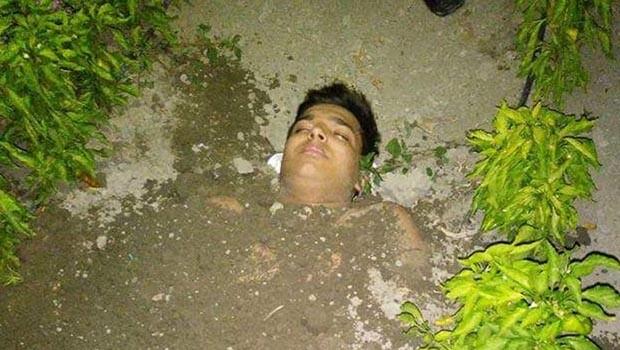
Akıma kapılan genç toprağa gömülerek kurtarıldı
   Now here's a young man who is grounded.

Hüseyin Çolak, who lives in the Kınık neighborhood of Kaş district,
Antalya province, was electrocuted by a cable in his home last
night.  Çolak's relatives were able to separate him from the cable
and then quickly took the trembling, purple-colored youth into the
garden, placed him on the ground and covered him with soil.

As a result, the electricity gradually left Çolak's body.  A rescue
unit was called but when the team arrived the young man's good
condition allowed them to leave without further ado.

Image result for kaş haritası


25 Temmuz 2016 Pazartesi

Coup-Busters: Rise of the Machines

türkçe links to original Turkish article

(Milliyet Newspaper, 24 July 2016)

En kahraman  iş makineleri!
Docile now but when called to action, watch out!

Heavy-duty machines played a crucial role in turning back the
coup attempt on 15 July.  It turns out that 20,000 of the 90,000
heavy-duty machines in Turkey were used against tanks and to
seal off military sites from where coup forces might emerge.

Tamer Öztoygar, chief of İMDER (Turkish Heavy-duty Machines
Distributors and Producers), took note of the 90,000 heavy-duty
machines currently in Turkey and explained that "60% of them are
used in rural areas and 40% in cities.  Heavy-duty machines and
dump trucks were used to stem the coup.  We contributed to
stopping the coup with 20,000 vehicles."

Relating the events of the coup night, Öztoygar said that "at first
everyone was trying to figure out what was going on.  Then, with
the President's instructions to come out on the streets, our sector
went into action, with heavy-duty machines, dump trucks and
winches utilized. Our citizens put these vehicles in front of military
sites."


                    "Heavy-duty Machines: 
         Merciless Foe of the Coup, Democracy's
                   Indispensable Equipment!"


One of the operators was killed while he was placing his vehicle
in front of the Istanbul municipal building, which was under attack.
Öztoygar explained that "our heavy-duty machines are as strong as
tanks and can even overturn them.  At 35-40 tons, our machines are
even stronger than tanks.  We're still on duty every night, with
operators working in shifts and changing their locations from time
to time. Until the President tells us to go home, we'll stay on duty."

Mayor Hilmi Türkmen of Üsküdar stated that "at 2200 on Friday
night our cleaning machines were making their rounds. When we
realized that the coup was underway we sent garbage trucks, dump
trucks, cleaning vehicles and sweepers to take control of critical
roads. We secured the road that leads to the TV transmitters in
Çamlıca and we sent our vehicles to the roads leading to the
(Bosphorus) bridge.  We blocked many military vehicles and tanks
from moving. On the morning of 16 July we piled up all of our
cleaning vehicles in front of the First Army HQS entrance. There
were 200 of our cleaning personnel on duty the night of the coup."

Image result for rise of the machines
               Kudos to our Turkish cousins!


24 Temmuz 2016 Pazar

For a Coup Dollars More

türkçe links to original Turkish article

(Milliyet Newspaper, 23 July 2016)

Image result for okunmuş 1 dolar
          Go ahead, make my day...

Within the scope of the FETO/YPG (coup plotters) investigation
being conducted by the Kocaeli public prosecutor, one of the aspects
that has drawn attention is that some of the arrested soldiers and
businessmen have had US one dollar bills found on them.

The serial numbers of the bills begin with the letters 'F', 'C' and 'J'.
It has been learned that the dollars were given to the FETO group
members by leader Fethullah Gülen as good-luck charms.  Also,
the serial number letters categorize the seniority of the members,
with the 'F' dollars being given to the seniormost of them.

Image result for lee van cleef
  Coup mastermind Fethullah Gülen

In the event that the coup might not succeed, a 'divorce fatwa' was
issued by Gülen, ordering members to divorce their wives so that
no harm would come to them and the children. Conversely, the coup
-plotters made ready for success by changing Turkish Lira into USD,
since the post-coup value of the dollar would likely rise dramatically
against the lira.  In a search conducted in the Turkish General Staff
HQS in Ankara after the coup was foiled, large amounts of USD were
found.

Image result for kocaeli haritası
                          Kocaeli province


23 Temmuz 2016 Cumartesi

Ancient History Edition

türkçe links to original Turkish article

(HaberTürk Newspaper, 23 March 2016)

bythnia all about Bythnia (Wikipedia)

Image result for 2 bin 400 yıllık sarayın tünel ve mahzenleri bulundu
Turn a shovel in Turkey and see what you might find.

In Bursa, a tunnel, cistern and water canals that brought water
from Uludağ mountain, all related to the ancient Bythnia Palace,
which was built on the Tophane slopes of Uludağ, have been
uncovered.

The Bursa municipality is conducting the restoration work in
Tophane Park, across fron the Muradiye State Hospital, that
will reveal living areas that date to 2,400 years ago.  Mayor Recep
Altepe explained that "when we entered the first door we found
10 separate large areas.  These are the palace's lower places and
were used for various purposes."

Image result for 2 bin 400 yıllık sarayın tünel ve mahzenleri bulundu
How could they have done this without an Iphone?

Continuing, Mayor Altepe stated that "there are corridors and
paths here, along with canals that brought pure, fresh water
to the palace from the Pınarbaşı spring on the Uludağ slopes.
Everything is connected. We've found an amazing treasure."

Image result for bursa tophane parkı harita

----------------------------------------------------------------------------
//ed. note. original Turkish article unavailable digitally but here's
an English version://

pyramid diary

(HaberTürk Newspaper, 23 July 2016)

'The Papyri of Khufu from Wadi al-Jarf' exhibition opens at the Egyptian Museum in Tahrir Square in Cairo. Photo/EPA
             Is that a comma or a period?...

In Cairo last Thursday, the Egyptian Museum displayed the
country's oldest papyrus, which was discovered 3 years ago.
The papyrus dates to 4,500 years ago and reveals how workers
carried the stones that made the Giza Pyramid, what they ate
and details about the workers' daily lives.

The Egyptian Chief of Antique Structures, Halit el-Anany,
noted that "the papyrus was found by a 13-person team of
French and Egyptian archeologists in a cave within Wadi el-
Jarf, the oldest port in the world. One of the papyrus belonged
to a worker named Marr, who wrote about the pyramid
construction work over the course of 3 months.  Marr explains
how they transported the heavy pyramid stones over the canals
of the Nile River."

The second papyrus details how much food each worker received
and the third one has statistics and management information
related to the construction of the pyramids.

 Image result for wadi el jarf map